AI for adjusters: where the next adjusters learn coverage
New adjusters will learn coverage on live claims, so the fastest gain in adjuster training and capacity comes from files where every finding shows the clause it rests on.
The people who used to teach them are retiring. ClaimVision does the reading and shows its working, so adjusters become decision-makers sooner. The judgement stays with your people.
The quiet problem
The apprenticeship is broken.
Coverage judgement was never really taught in a classroom. It was absorbed, by sitting near the adjuster who had seen four thousand roofs, who could glance at a declarations page and know which endorsement was going to bite. The training program was proximity. It took years, and it worked.
Then the people retired faster than the proximity could transfer. The new adjuster gets a license, a laptop and a queue, and makes their first coverage calls on real claims at the moment they know the least. You cannot hire your way out of this. You can shorten the distance between new and good.
Every claim, a worked example
How does a claim file teach coverage?
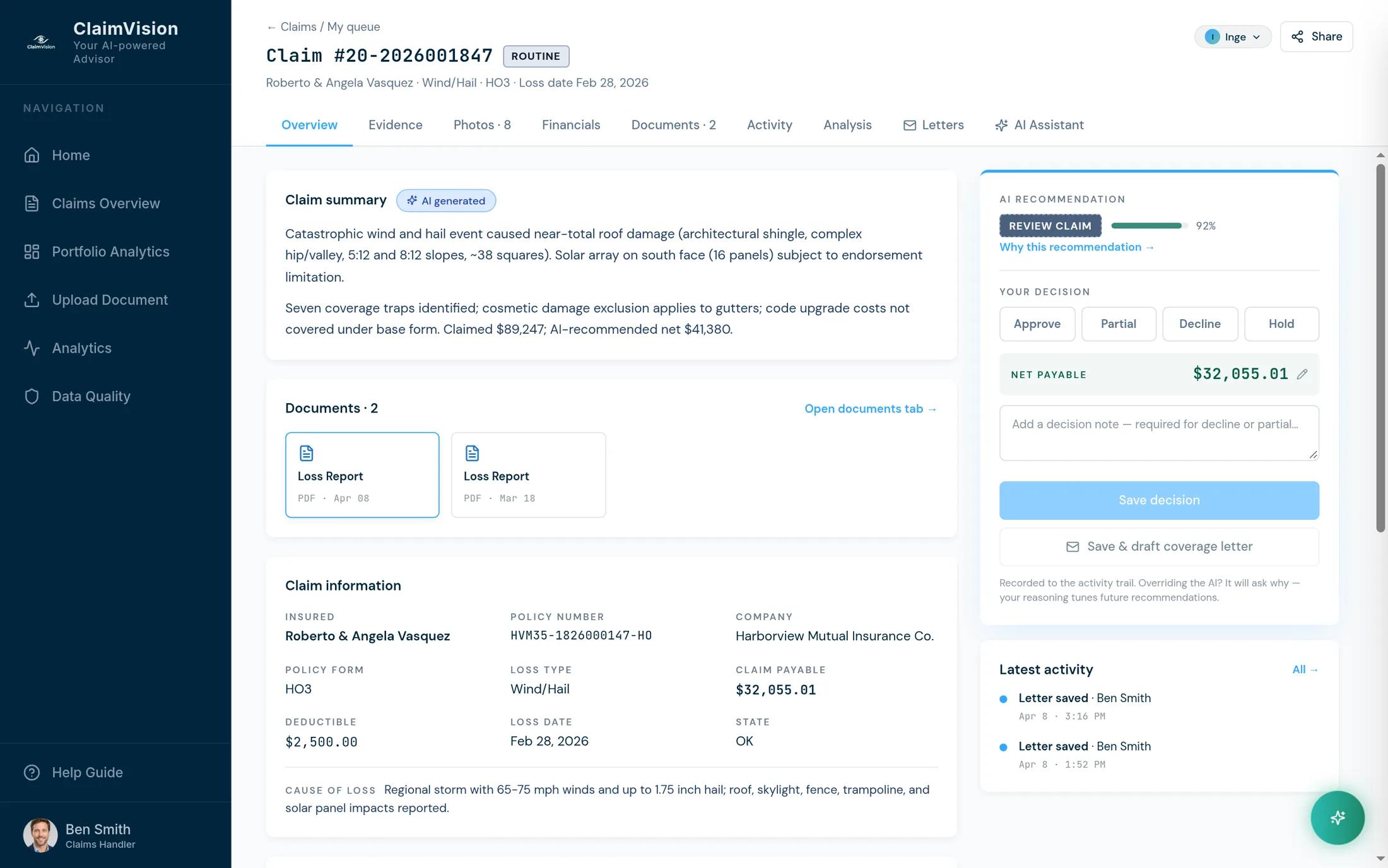
By showing its working on every answer. When the ask your claims data answers a coverage question, it shows the clause, the reasoning that led there and the dollar consequence. A new adjuster who asks why a claim settles at ACV when the policy says replacement cost learns more than one answer. They learn the shape of the trap: endorsements narrow the base form, older roofs are where it happens, read the declarations page first.
| Learning by proximity | With the clause on every finding | |
|---|---|---|
| Asking a question | Costs a senior colleague's time, and some nerve the second time. | Ask twenty times. The twentieth answer is as patient as the first. |
| A first-year adjuster's file | Checked as far as they know to check. | Gets the same policy coverage checking as a twenty-year veteran's file. |
| When a senior adjuster retires | Their rulings on ambiguous claims leave with them. | Their rulings, and the reasons they record for overrides, stay in the AI claims audit trail. |
| Who decides | The adjuster. | The adjuster, with everything in front of them. |
Ask why young adjusters leave and the answer is rarely the families. It is drowning in documents and fearing the miss that ends up in a file review. Take those away and the job that is left is the one worth staying for: investigation, judgement, helping people through their worst week.
Adjusters who decide sooner also close claims sooner, which is how capability feeds the work to reduce claims cycle time, and what keeps a catastrophe claims surge a hard week rather than a lost quarter.
FAQ
Questions buyers ask
How can AI help train new insurance adjusters?
AI helps train new adjusters when every answer shows its working. ClaimVision shows the clause, the reasoning and the dollar impact behind each finding, so every live claim becomes a worked example. The adjuster still makes the decision.
Will AI replace insurance adjusters?
Not with ClaimVision. The reading goes to the machine. The judgement stays with your people. Investigation, judgement and helping families through their worst week remain the adjuster's job, with more time for each.
Can a new adjuster rely on ClaimVision's findings?
A new adjuster can check every finding, which is the point. Each one points to the page and clause it came from, so the adjuster reads the source before deciding. The same careful coverage check runs on a first-year adjuster's file as on a veteran's.
How does ClaimVision help adjuster capacity?
It takes the reading off the desk. Every page is read before the adjuster opens the file, so their time goes to decisions, calls and inspections. In a storm week, that is the difference between a hard week and a lost quarter.