How do you handle a CAT surge with the same team?
You handle a catastrophe claims surge by giving the reading to the machine, so the same team can give every claim the same care at storm volume.
The storm does not wait for your staffing plan. One Tuesday a hurricane makes landfall, and by Friday the queue has multiplied. The prompt-payment clock does not pause, and behind every claim number is a family living in the damage while they wait.
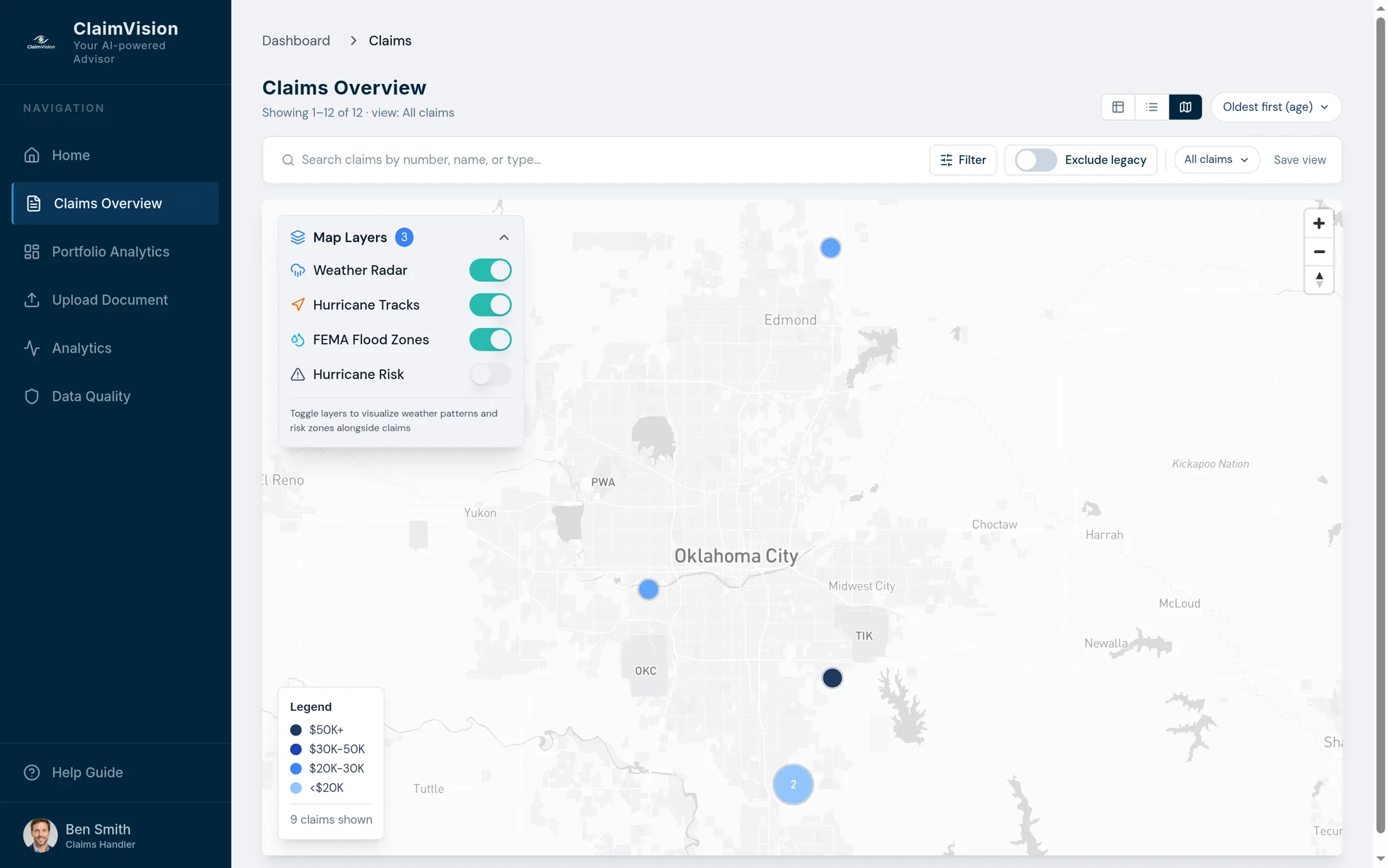
The week the storm lands
What changes when the reading is already done?
Same team. Same hours. The care owed on each file does not shrink because the queue grew.
| Reading by hand | Every page read before the file is opened | |
|---|---|---|
| Routine, coverage-clear claims | Wait in the same queue as everything else. | Arrive read and reconciled, ready for an adjuster to review and send. |
| Claims that need judgement | The adjuster's day goes to reading before any deciding starts. | Arrive with the judgement calls isolated, the evidence assembled and the dollar impact of each choice shown. |
| Independent adjuster files | Checked as time allows. Quality varies with headcount. | Every file, staff or contract, gets the same careful check. Consistency does not dip because headcount surged. |
| The prompt-payment clock | Keeps counting while the file waits to be read. | Keeps counting, without the days spent waiting for the reading. |
| Families | Wait longer in a damaged home. | Hear sooner what their policy covers. |
Every file gets the same policy coverage checking and the same reconciliation, so claims leakage does not rise with the volume.
Many times the claims
The same care, at storm volume.
ClaimVision does the reading, so your people spend their judgement where it is needed. Routine claims are ready for review sooner. The hard ones reach an adjuster already read. Surge week becomes a hard week, not a lost quarter.
It is the same reading that helps you reduce claims cycle time on an ordinary Tuesday; the storm is the week it matters most. It is also where new adjusters learn fastest, so surge readiness and adjuster training and capacity are one plan.
What we can show today: a full day's reconciliation work on a real large-loss claim, done exactly, in under a minute.


FAQ
Questions buyers ask
How do insurers handle a catastrophe claims surge?
Most carriers handle a catastrophe claims surge by triaging, bringing in independent adjusters and accepting that some care slips. The reading is the part that does not scale: every file still has to be read before anyone can decide it. ClaimVision reads every page of every claim as it arrives, so your team spends the surge week deciding rather than reading.
Does a hurricane stop the prompt-payment clock?
No. Some states allow a fixed extension after a declared catastrophe, but the clock keeps running. Texas, for example, extends its claim-handling deadlines by 15 days after a weather-related catastrophe or major natural disaster declared by the commissioner (Texas Insurance Code §542.059). Check your own states' rules before the season, not during it.
Does ClaimVision replace adjusters during a CAT event?
No. The reading goes to the machine. The judgement stays with your people. Claims that need judgement reach an adjuster with the evidence assembled and the dollar impact of each choice shown.
When should a carrier prepare for a CAT surge?
Before the season. The worst time to evaluate surge tooling is during a surge. Trust in letting routine claims move quickly is earned against your own team's decisions, so starting early means that trust is in place when the storm lands.